
The Perfect Cast Iron Steak: A Carnivore's Guide to Excellence
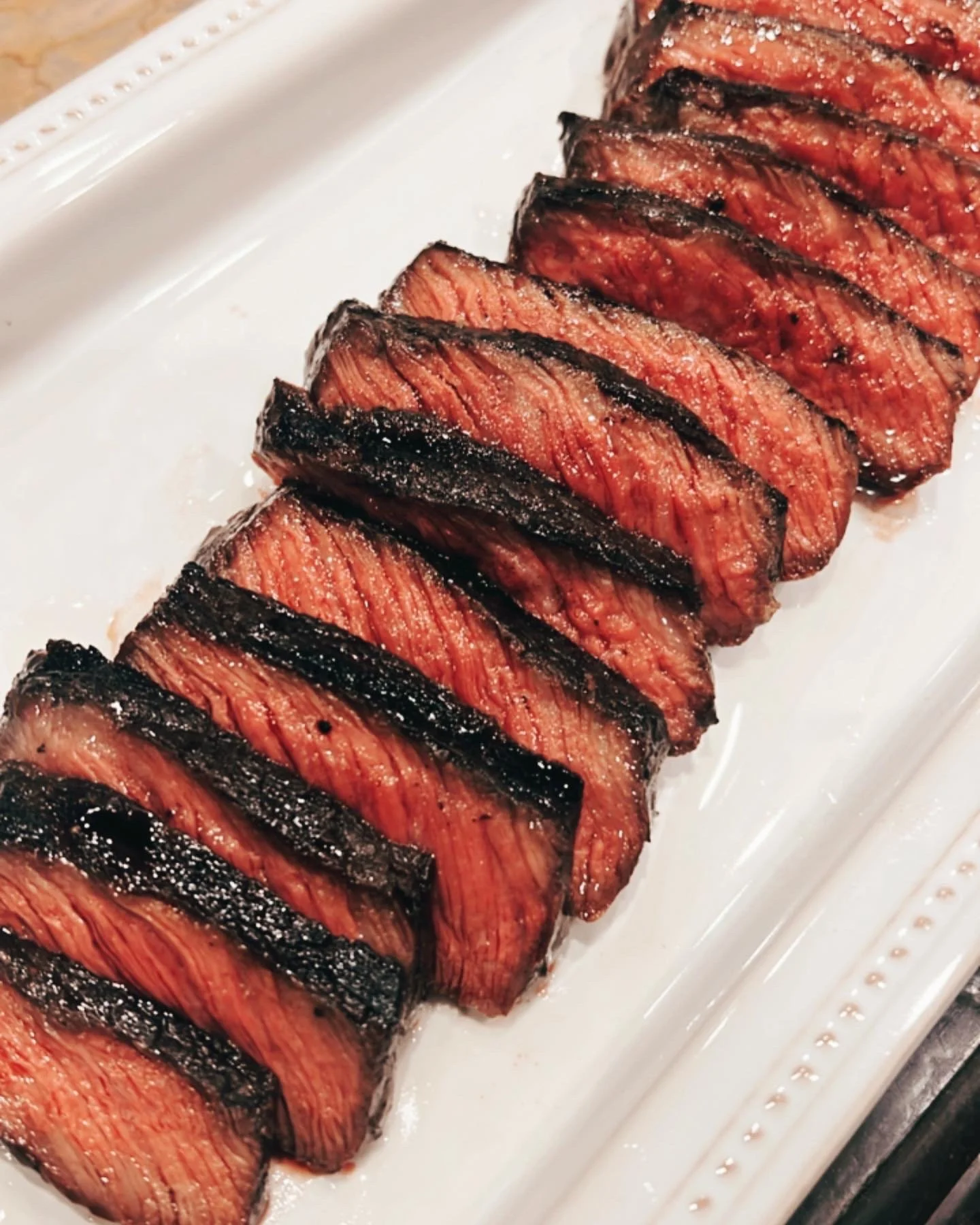
Snake River Farms Zabutton
There's something primal about the sizzle of a perfect steak hitting a screaming hot cast iron pan. It's the sound that makes carnivores weak in the knees and vegetarians question their life choices. Today, we're diving deep into the art of creating the ultimate steak experience – one that'll have you questioning why you ever bothered with restaurants.
The Holy Trinity of Great Steak
Before we get our hands dirty (and our kitchens smoky), let's talk about the three pillars that separate good steaks from legendary ones:
Quality Meat: This isn't the time to hunt for bargains. We're talking about grass-fed, premium cuts from places like Snake River Farms, where cattle live their best lives munching on actual grass instead of corn-based fast food. The difference isn't just ethical – it's transformational. Grass-fed beef has a deeper, more complex flavor profile with notes that'll make your taste buds do a happy dance.
Proper Salt: Put down that table salt and step away slowly. We're using Maldon sea salt flakes here – those beautiful, pyramid-shaped crystals that crunch like tiny flavor bombs and dissolve at just the right rate to penetrate your steak's surface while maintaining textural interest.
Nuclear-Hot Cast Iron: Your pan needs to be hotter than a summer sidewalk in Phoenix. We're talking "smoke alarm might go off" hot. This isn't just cooking – it's controlled culinary violence in the best possible way.
The Perfect Cast Iron Steak Recipe
What You'll Need
For the Steak:
2 ribeye or Zabbuton ( my fav steak cut ever ) 1.5 -2 inches thick, grass-fed from Snake River Farms or similar quality
Maldon sea salt flakes
2 tablespoons high smoke point oil (avocado or tallow)
For the Finishing Touch:
4 tablespoons unsalted butter
3-4 fresh rosemary sprigs
3 garlic cloves, smashed
The Method (AKA The Path to Steak Nirvana)
Step 1: The Preparation Ritual
Remove your steaks from the fridge 30-45 minutes before cooking. Cold steak hitting hot pan equals uneven cooking, and we don't do uneven around here. Pat them completely dry with paper towels – moisture is the enemy of that beautiful crust we're after.
Season generously with Maldon salt flakes . Don't be shy – that thick cut can handle it. The salt will start working its magic, drawing out moisture that will then be reabsorbed along with the seasoning.
Step 2: The Heat of a Thousand Suns
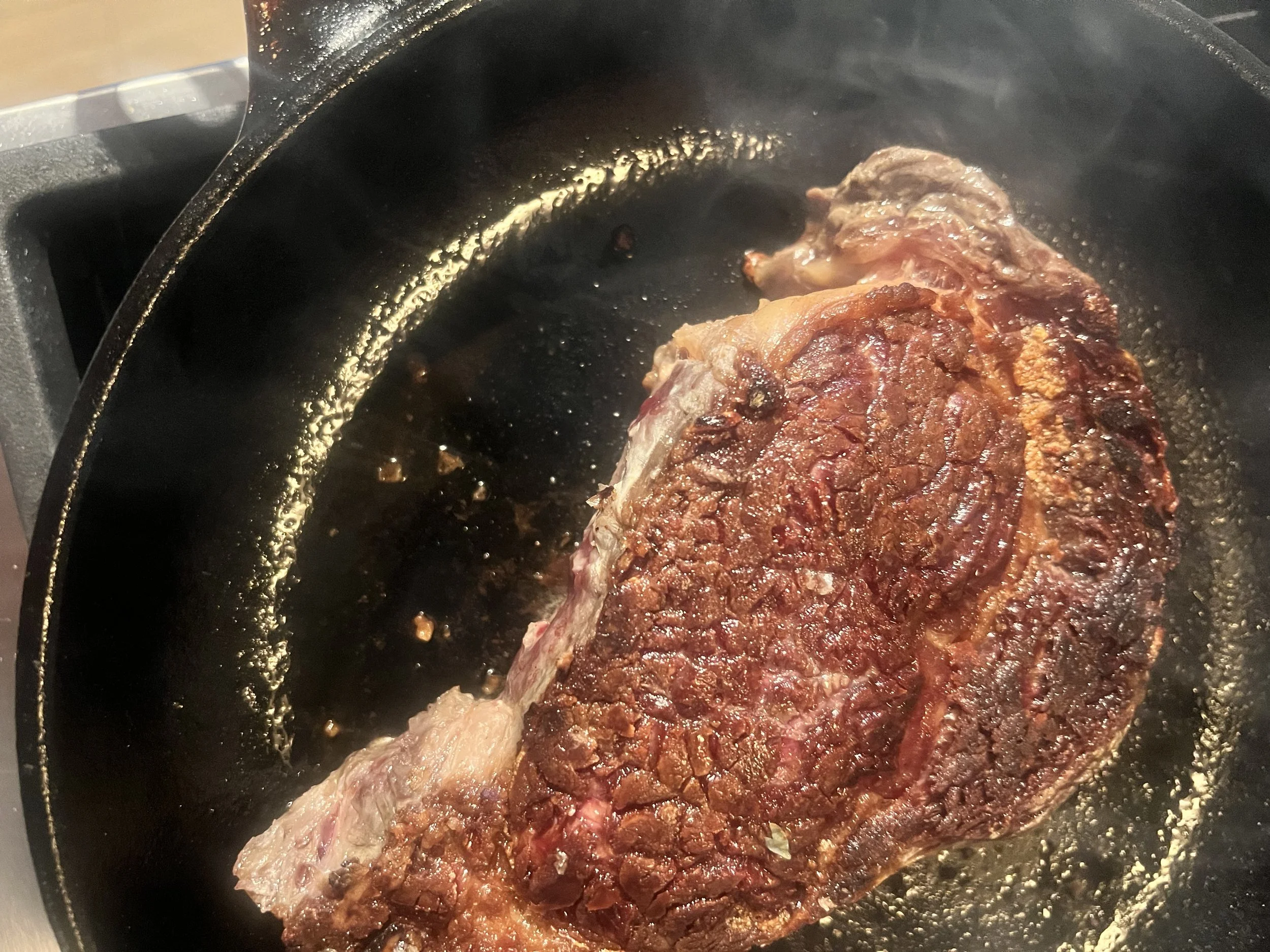
Place your cast iron pan over medium-high to high heat and let it preheat for 5-7 minutes. You'll know it's ready when a drop of water immediately sizzles and evaporates on contact. Add your high smoke point oil and swirl to coat – it should shimmer and almost smoke immediately.
Step 3: The Sear That Started a Thousand Wars
Gently lay your steaks in the pan (away from you to avoid oil splatter). DO NOT MOVE THEM. I repeat: DO NOT TOUCH, POKE, FLIP, OR EVEN THINK ABOUT THEM for 3-4 minutes. You'll hear aggressive sizzling – this is the sound of success.
The steak will release naturally when it's ready to flip. If it's sticking, it's not ready. Patience, grasshopper.
Step 4: The Flip and Finish
Flip once (and only once) and sear the other side for another 3-4 minutes for medium-rare perfection. For different doneness levels, adjust accordingly, but remember – you can always cook it more, but you can't cook it less.
Step 5: The Butter Bath Finale
This is where magic happens. Reduce heat to medium-low and add your butter, smashed garlic cloves, and rosemary sprigs to the pan. As the butter melts and starts to foam, tilt the pan slightly and use a spoon to continuously baste the steaks with the aromatic butter mixture.
The butter will turn golden brown, the rosemary will release its piney perfume, and the garlic will become sweet and fragrant. Keep basting for 1-2 minutes – this is what separates good steaks from transcendent ones.
Step 6: The Rest
Remove steaks to a cutting board and let them rest for 5-10 minutes. I know it's torture, but this allows the juices to redistribute throughout the meat. Cover loosely with foil if you're worried about heat loss, but trust the process.
Pro Tips from the Trenches
Temperature Matters: Invest in an instant-read thermometer. Medium-rare is 130-135°F internal temperature. Don't guess – know.
Thickness is King: Thin steaks are the enemy of even cooking. Go thick or go home.
Salt Early, Salt Often: For next-level flavor, salt your steaks up to 24 hours in advance and let them dry-brine in the refrigerator.
Smoke Management: Open windows, turn on fans, maybe warn the neighbors. A properly seared steak will smoke – embrace it.
The Final Word
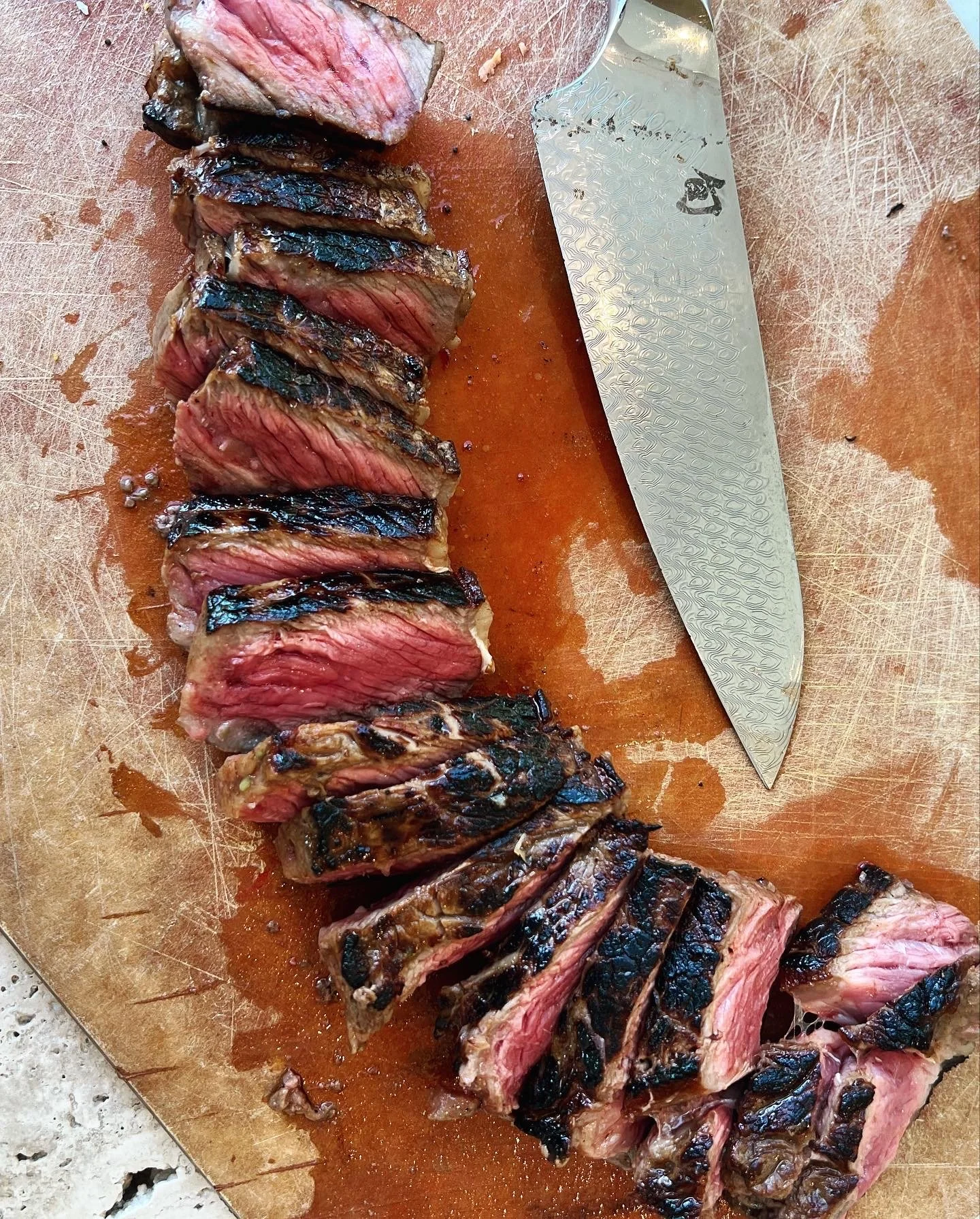
When you slice into that perfectly seared, butter-basted, rosemary-scented masterpiece and see that wall-to-wall pink interior surrounded by a caramelized crust, you'll understand why people write poems about steak. The combination of quality grass-fed beef, proper seasoning with Maldon salt, and the intense heat of cast iron creates something greater than the sum of its parts.
This isn't just dinner – it's a statement. A declaration that you refuse to accept mediocrity when excellence is just a hot pan away. So fire up that cast iron, grab some quality beef, and prepare to ruin yourself for every other steak you'll ever eat.
Bone apple tea, friends. Your taste buds will thank you.
