
The Dish My Clients Always Come Back For:: My Grass-Fed Steak
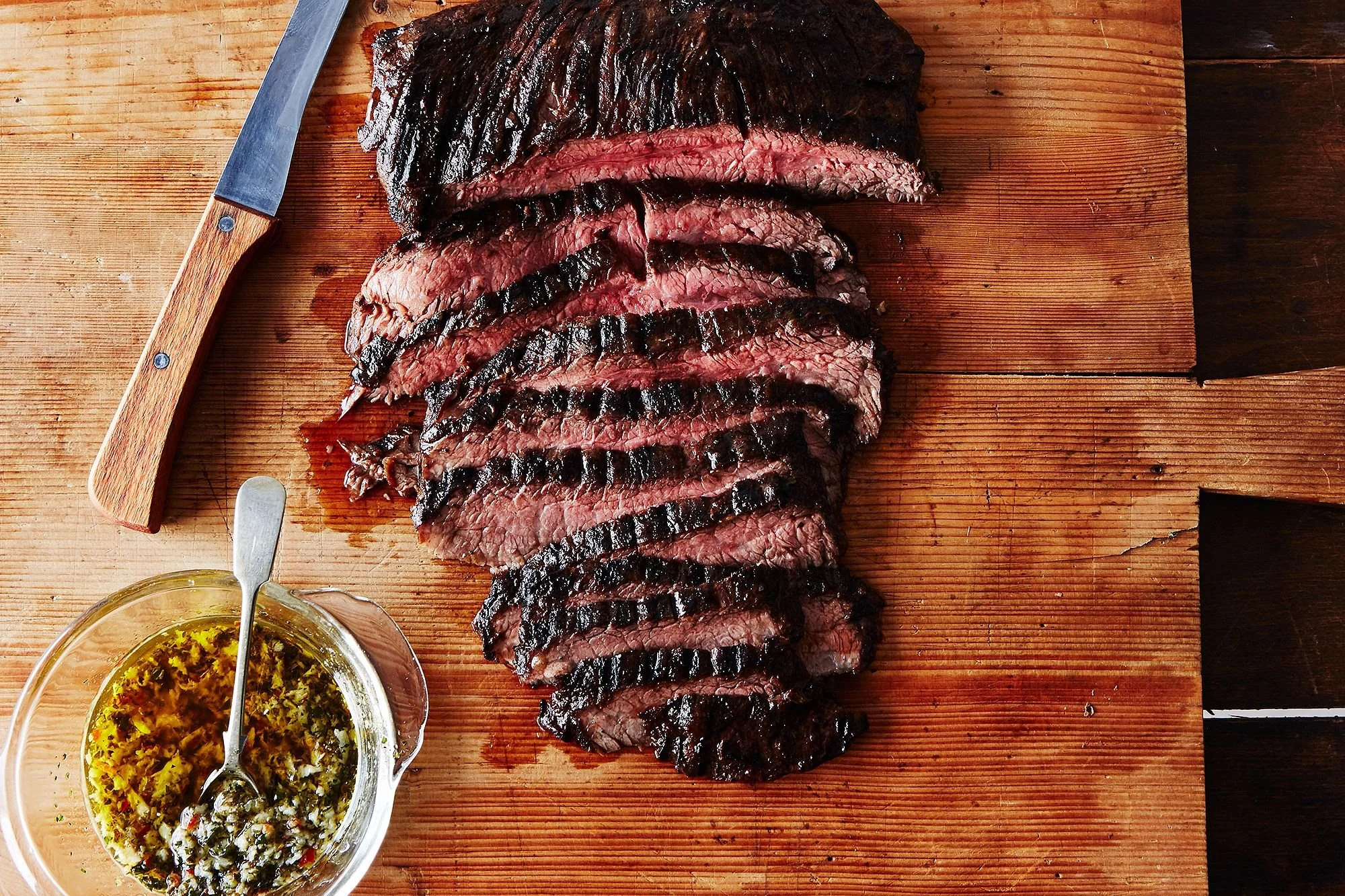
pro tip: use charcoal rub for that color pop
There are elaborate dishes, and then there are dishes that win people over with simplicity alone. My grass-fed steak falls firmly into the second category. No complicated marinade. No long list of spices. Just beautiful meat, a screaming-hot pan, and a little chef restraint.
It’s the dish clients request again and again. The one that makes people pause mid-bite and ask, “Wait… how did you cook this?”
The truth is refreshingly simple. When the ingredients are exceptional, you don’t need to hide them behind technique. You just need to respect them.
The Simple Cast-Iron Method
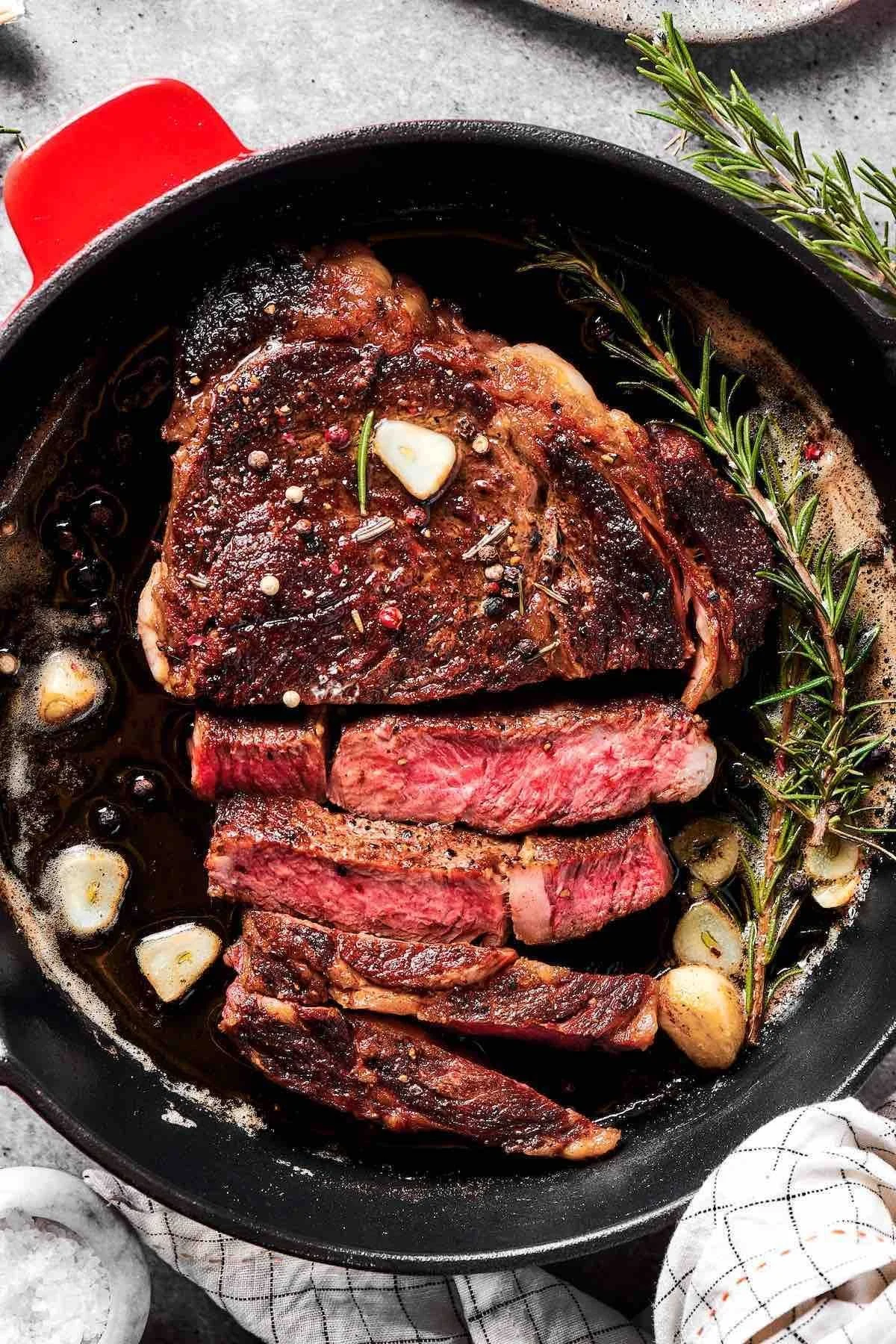
pro tip:: finish with gf butter and drop garlic and rosemary in pan for steakhouse flavor
This is my go-to preparation in nearly every kitchen I cook in. It’s reliable, deeply flavorful, and produces the kind of crust that steak lovers dream about.
What you need
A high-quality grass-fed steak (ribeye, NY strip, or filet)
Maldon flaky sea salt
A small drizzle of extra virgin olive oil
A very hot cast-iron skillet
The method
Bring the steak to room temperature for about 20–30 minutes before cooking. This ensures an even cook from edge to center.
Heat your cast iron until it’s almost smoking. Cast iron holds heat beautifully and gives you that golden, caramelized crust.
Lightly coat the steak with olive oil and season generously with Maldon salt.
Sear the steak in the hot pan for about 2–3 minutes per side depending on thickness. Resist the urge to move it around. Let the crust develop.
Let it rest. This is where most people go wrong. Rest the steak for 5–10 minutes so the juices redistribute instead of running out onto the board.
Slice against the grain, then finish with a drizzle of high-quality extra virgin olive oil and another pinch of flaky salt.
That last step is a quiet chef trick. The olive oil amplifies the richness of the meat while the salt wakes up every flavor on the plate.
Why Quality Meat Matters
If there’s one place to invest in your food, it’s protein. With steak, quality changes everything.
Grass-fed beef typically contains:
Higher levels of omega-3 fatty acids
More conjugated linoleic acid (CLA)
Higher antioxidant content such as vitamin E
A cleaner fat profile compared to grain-finished beef
Grass-fed animals also tend to produce meat with a deeper, more mineral-rich flavor that simply tastes like real beef.
In other words, when the meat is good, the cooking can stay beautifully minimal.
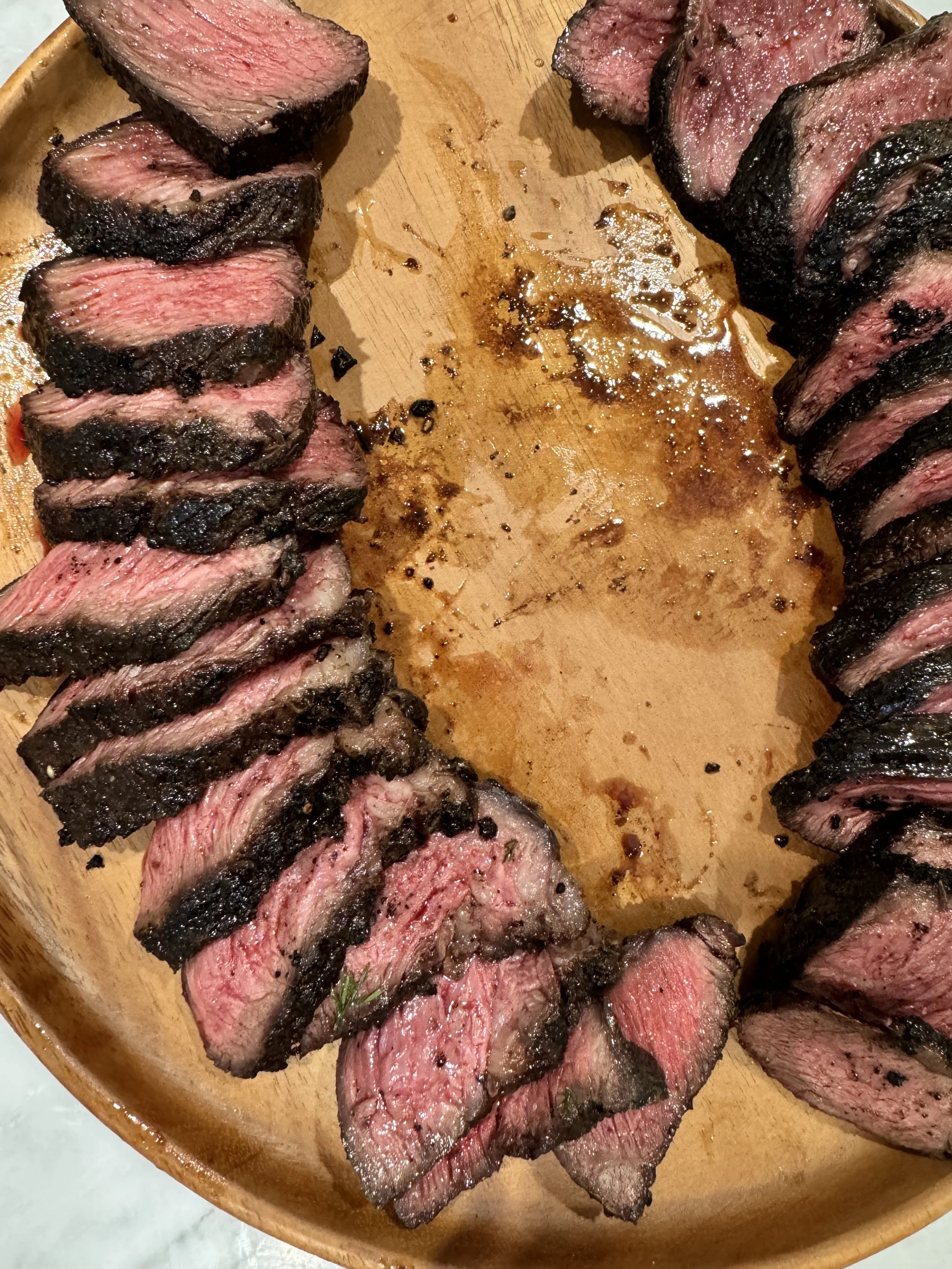
this snake river zabutton is my fav cut
Steak as a Longevity Protein
Steak often gets an unfair reputation in wellness conversations, but when sourced well and enjoyed thoughtfully, it can be an incredibly powerful nutrient-dense food.
A typical 6-ounce grass-fed steak provides roughly:
40–45 grams of complete protein
Highly bioavailable iron
Vitamin B12 for energy and nervous system health
Zinc for immune support
Creatine and carnosine, compounds that support muscle and cognitive function
Protein is one of the most important nutrients for maintaining muscle mass, metabolic health, and longevity, especially as we age. For many people, steak is one of the most efficient ways to meet those needs.
The Real Secret
People assume there’s some elaborate culinary trick behind this dish. There isn’t.
The secret is simply this:
Buy the best steak you can find
Use a hot pan
Salt it well
Let it rest
Finish with great olive oil
That’s it.
Sometimes the most memorable dishes aren’t the most complicated. They’re the ones that let exceptional ingredients speak for themselves. And in this case, a beautiful grass-fed steak does exactly that.
